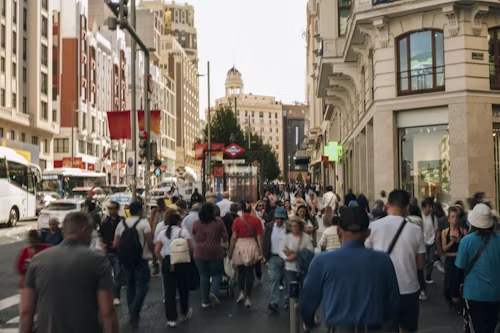
Madrid, the magnificent capital city of Spain, features one of the most advanced, clean, efficient, and highly affordable public transportation networks in all of Europe. The city’s vast underground train grid, globally known as the Metro de Madrid, seamlessly connects every single historic neighborhood plaza, cultural monument zone, and transit terminal. Whether you are landing at Madrid-Barajas Airport, catching a high-speed train at Atocha station, or heading out to explore the bustling retail corridors of Gran Vía, relying on public transit is far faster and cheaper than renting an independent vehicle or hailing street taxis.
For first-time international tourists, students, and newly arrived digital nomads, stepping inside a massive underground transit junction can feel slightly overwhelming. From choosing the correct zone pass structure to loading fares onto a contactless Multi-Card, here is the ultimate, bulletproof guide to navigating Madrid’s public transport easily like a true local resident.
1. Understanding the Madrid Metro System (Zones & Timelines)
The Madrid Metro network features 12 primary subway lines, three Light Rail lines (Metro Ligero), and a dedicated branch line (Ramal) connecting Ópera and Príncipe Pío stations. The entire layout operates on a beautifully color-coded and numbered grid system, making it incredibly simple to track your route options on digital display screens at any terminal.
- The Core Zones: For 99% of general tourists exploring the city center, you will operate strictly within Zone A. This covers the absolute heart of Madrid, including major architectural landmarks like Puerta del Sol, Retiro Park, and the Royal Palace. If you plan to take day trips to suburban residential boundaries like Alcalá de Henares or Getafe, you will cross into Zones B1, B2, or C.
- The Operational Hours: Subway stations open their automated entrance barriers promptly at 6:00 AM every single morning and close at 1:30 AM at night. Trains run consistently every 2 to 4 minutes during high-peak morning rush hours, and settle down to a 10-to-15 minute frequency timeline during late-night hours.
2. The Golden Pass: The Multi-Card (Tarjeta Multi)
Madrid has phased out traditional paper subway tickets completely. To clear the automated station security turnstiles, you must purchase a red, contactless plastic smart pass called the Tarjeta Multi.
- How to Buy It: You can effortlessly purchase a Tarjeta Multi card directly from the large automated touch-screen ticket terminals situated at the entrance of any Metro station terminal. The physical card costs a one-time non-refundable setup fee of €2.50.
- Loading Your Fares (The Smart Budget Choice): Do not purchase single one-way transit tokens, as they carry premium distance surcharges. Instead, select the Metrobús 10-Journey Ticket option on the screen. For roughly €12.20, this bundle gives you 10 complete rides that can be utilized interchangeably across both the Metro network and the blue EMT city buses. Pro-Tip: The multi-card can be shared among multiple family members traveling together; simply scan the card, pass through the gate, and hand it back to your partner to scan again.
- The Airport Surcharge: If you are boarding or departing from Madrid-Barajas Airport (Airport T1-T2-T3 or T4 stations on Line 8), the system mandates a special €3 Airport Surcharge that must be loaded onto your Multi-Card to exit the station barriers safely.
3. Expanding Your Options: EMT Buses & Cercanías Trains
While the underground subway system is spectacular, combining it with Madrid’s overland transport networks will make your holiday commutes completely flawless:
- The Blue EMT City Buses: Madrid’s bus network operates over 2,000 distinct vehicles running across extensive street lanes. They are perfect for sightseeing under the sun. Note: You must board from the front door and scan your Multi-Card instantly at the terminal reader.
- Cercanías Commuter Trains: These are large, red-and-white double-decker regional trains operated by Renfe. They cut straight across the city center tunnels much faster than the standard Metro, making them the ultimate transport tool to travel between major terminal hubs like Chamartín, Recoletos, and Atocha. You can track network delays and check real-time schedule timetables directly via the official Consorcio Regional de Transportes de Madrid Portal.
📊 Madrid Public Transport Overview Grid
To help you choose the best transit option based on your holiday destination profile, utilize this clean, scannable reference table:
| Transit Type | Primary Network Coverage | Best Used For | Ticket Loading System |
|---|---|---|---|
| Madrid Metro | Entire City Center (Zone A & B) | Fast, traffic-free urban commuting | Tarjeta Multi (10-Journey Option) |
| EMT City Bus | Extensive overland street lanes | Scenic sightseeing & short distances | Tarjeta Multi / Contactless Card |
| Cercanías Train | Intercity terminal hubs & suburbs | Rapid travel to Atocha / Airport / Day Trips | Renfe Ticket Machine / Tarjeta Multi |
🏨 Pre-Book Your Stay & Travel Logistics Early
Secure your accommodations near verified metro corridors using authorized booking portals:
- Madrid Accommodations: Check Central Madrid Hotels Online.
- Sightseeing Passes: Pre-Book Top Sightseeing Tours.