When planning a vacation or a long-term relocation to Southern Europe, managing daily health logistics is essential for a smooth itinerary. Beyond tracking local transport grids or budgeting for tapas dinners, one of the absolute most frequent questions international tourists, digital nomads, and expats ask is: Can you drink the tap water in Spain?
The short, definitive answer is yes, tap water in Spain is 100% safe to drink. According to strict European Union environmental regulations and national health monitoring frameworks, over 99.5% of Spain’s public tap water network meets rigorous safety standards. Drinking from the faucet will not make you sick, cause stomach bugs, or expose you to dangerous bacteria. However, the mineral composition, chemical processing traits, and actual culinary taste of tap water vary drastically depending on which Spanish city or coastal province you are visiting. Here is the ultimate, bulletproof breakdown of tap water quality across Barcelona, Madrid, and Valencia.
1. Madrid: The Gold Standard of Spanish Tap Water
Madrid is universally celebrated across the Iberian Peninsula for having the absolute best-tasting and highest-quality tap water in Spain. You will never see local residents buying heavy plastic water bottles in central supermarkets, as the faucet water is pristine.
- The Source: Madrid’s public water network is managed by Canal de Isabel II, drawing its supply from pristine, protected mountain reservoirs tucked high inside the Sierra de Guadarrama mountain range.
- The Mineral Profile: Because the water flows naturally over granite rock formations, it is incredibly soft water. This means it contains very low levels of calcium and magnesium minerals.
- The Taste: It is completely odorless, crisp, and clean-tasting, mimicking premium bottled mountain spring water. Feel free to refill your reusable travel flasks straight from your hotel room bathroom or any public stone drinking fountain (fuente) across the capital’s historic plazas.
2. Barcelona: 100% Safe but Bad-Tasting Hard Water
In stark contrast to Madrid, the tap water profile in Catalonia’s coastal capital is a frequent topic of debate among global holidaymakers and newly arrived digital nomads.
- The Source: Barcelona draws its primary municipal water supply from the Ter and Llobregat rivers, alongside advanced coastal desalination plants running along the Mediterranean shoreline.
- The Mineral Profile: Because the regional soil is rich in limestone, Barcelona’s water is classified as extremely hard water, packing dense concentrations of calcium, magnesium, and chlorides. To guarantee public safety over long urban pipe networks, local authorities utilize a high level of chlorine processing.
- The Taste: While it is chemically 100% safe and free of bacteria, it carries a heavy, distinctly metallic, and slightly chlorinated taste that many international travelers find unpleasant.
- The Survival Strategy: Most locals utilize basic carbon-filter jugs (like Brita) to strip out the chlorine smell for daily drinking and coffee making, or buy cheap 5-liter bottled water jugs (garrafas) from local corner stores (supermercados) for direct consumption.
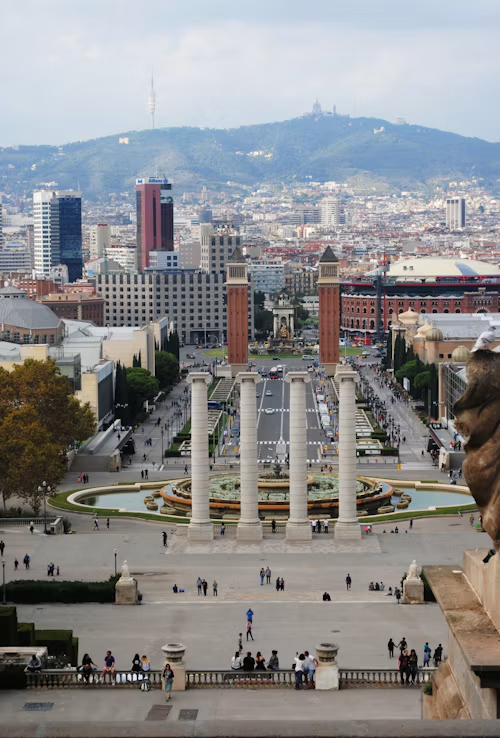
3. Valencia: Highly Mineralized Coastal Water
Much like neighboring Barcelona, Spain’s third-largest city, Valencia, features coastal tap water attributes that require a brief adaptation period.
- The Source: Valencia relies heavily on the Turia and Júcar river basins for its public municipal network infrastructure.
- The Mineral Profile: The water here carries a massive mineral weight and a high pH level, resulting in heavily calcified hard water lines.
- The Taste: The high mineralization gives the water a flat, slightly bitter taste. While cooking rice for a traditional Valencian Paella or boiling pasta using tap water is completely fine and safe, drinking it straight from the faucet might feel unpalatable if you are accustomed to soft water. Buying mineral water bottles or using filtration attachments is highly popular among urban residents here.
📊 Quick-Reference: Spain Tap Water Comparison Grid
To help you instantly understand what to expect when turning on the faucet at your holiday destination, utilize this clean, scannable reference overview:
| City Name | Water Hardness Level | Public Safety Status | Taste Profile | Recommended Strategy |
|---|---|---|---|---|
| Madrid | Very Soft | 100% Safe & Clean | Crisp, odorless, spring-like | Drink directly from tap; save money |
| Barcelona | Extremely Hard | 100% Safe & Monitored | Metallic, heavy chlorine notes | Use a filter jug or buy bottled water |
| Valencia | Very Hard | 100% Safe & Regulated | Flat, slightly bitter mineral tones | Use for cooking; buy bottles for direct drinking |
🎒 Practical Advice for Travelers: Spotting “Agua Potable”
While exploring historic Andalusian white villages, hiking mountain trails, or walking through major urban parks, you will frequently spot public outdoor stone fountains. To ensure you are drinking safe water, look for these official Spanish signs:
- Agua Potable: This means the water is officially treated, municipal, and 100% safe for direct human consumption.
- Agua No Potable: This indicates the water is untreated, recycled, or meant exclusively for garden irrigation or animals. Never drink from a fountain displaying this sign.